

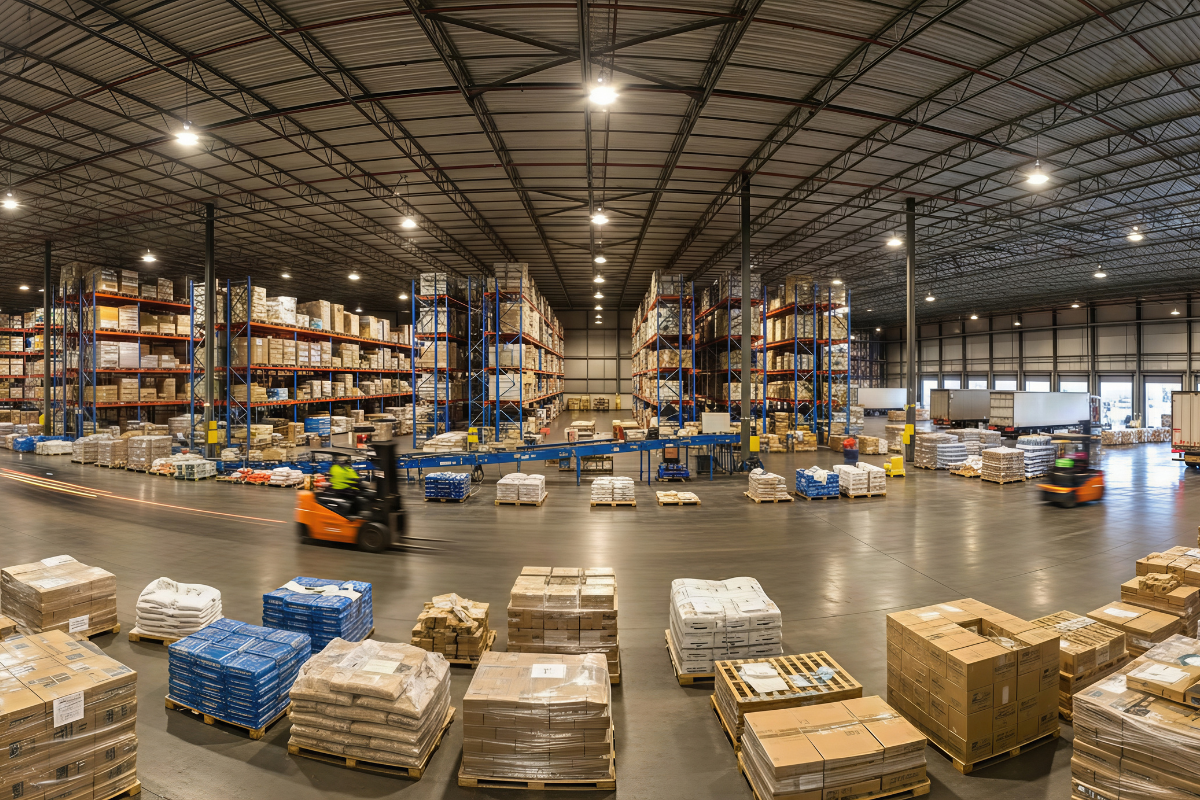
If you’ve ever looked at your warehouse and thought, “Why are we storing this if it’s going right back out?”, you’re already thinking about cross-docking.
Today, customers want shorter lead times. Retailers want tighter inventory turns. Procurement teams want lower carrying costs. And operations managers? They want fewer headaches. That’s where cross-docking works best.
Done right, cross-docking can turn your warehouse from a storage facility into a high-speed transfer hub, keeping freight moving instead of sitting still.
What Is Cross-Docking?
At its core, cross-docking is simple. Freight comes in. Freight goes out. Very little (if any) storage in between.
Instead of receiving product, putting it away, picking it later, and then shipping it, cross-docking allows inbound shipments to be transferred directly to outbound trucks within hours. Think of it as a relay race instead of a waiting room.
There are a few common forms of cross-docking:
Pre-distribution: Products are already sorted and labeled before they arrive.
Distribution: Goods are sorted at the dock and immediately sent to outbound destinations.
Manufacturing: Components arrive and move straight to production.
Transloading: Freight shifts from one mode (like rail) to another (like truck) without long-term storage.
But no matter the type, the goal is the same: reduce dwell time and increase velocity.
Why More Companies Are Turning to Cross-Docking
The supply chain world has changed dramatically over the past few years. Warehousing costs are rising. Labor is tight. Customers expect next-day delivery. And excess inventory ties up capital. Cross-docking addresses these pressures head-on.
1. It Speeds Up Fulfillment
Less storage time means faster delivery cycles. Instead of sitting on shelves, products are already on their way to customers. For retail, automotive, and e-commerce shippers especially, that time savings adds up quickly.
2. It Reduces Warehousing Costs
Every pallet you store costs money regarding space, labor, equipment, insurance. Cross-docking minimizes storage needs, which can significantly reduce overhead. In high-cost markets or peak seasons, that’s a major advantage.
3. It Lowers Handling Risk
Every time a product is moved, scanned, or re-palletized, there’s potential for error or damage. Cross-docking limits touchpoints, improving accuracy and reducing claims.
4. It Improves Inventory Flow
Cross-docking encourages a “flow-through” mindset instead of a “stockpile” mindset. That improves inventory turns and keeps working capital free for other investments.
When Cross-Docking Makes the Most Sense
Let’s be clear, it’s not a one-size-fits-all solution. It works best when:
- You’re moving high-volume, fast-turn products.
- Demand is predictable.
- Shipments are time-sensitive.
- Inbound freight arrives consistently and on schedule.
- You’re distributing to multiple locations quickly.
If you’re dealing with slow-moving or highly customized inventory, traditional warehousing may still be necessary. The key is knowing which SKUs should flow through and which should stay put.
Best Practices for Successful Cross-Docking
Cross-docking can dramatically improve fulfillment speed, but only if it’s executed with precision. Without planning, it can create bottlenecks faster than it creates efficiency. Here’s how to do it right.
1. Start with Clear Product Segmentation
Not every product should be cross-docked. Identify:
- High-velocity SKUs
- Promotional inventory
- Seasonal surges
- Retail replenishment goods
These are prime candidates. Keep slower-moving or unpredictable items in storage. The goal isn’t to eliminate warehousing, it’s to use it strategically.
2. Strengthen Supplier Communication
Cross-docking only works if inbound freight is predictable. That means:
- Accurate advanced shipment notifications (ASNs)
- Proper labeling
- Consistent pallet configurations
- On-time arrival windows
When suppliers align with your cross-dock standards, dock operations run smoothly. When they don’t, congestion builds quickly. Clear expectations upfront make all the difference.
3. Invest in Real-Time Visibility
You cannot cross-dock efficiently if you don’t know when it’s arriving. Real-time tracking tools, integrated WMS and TMS systems, and accurate barcode or RFID scanning help ensure that freight moves quickly to the correct outbound door. Visibility reduces guesswork. And guesswork slows fulfillment.
4. Optimize Dock Scheduling
Your dock doors are prime real estate. Without tight scheduling, inbound trucks arrive at the same time outbound trucks are waiting, and suddenly your “fast” operation stalls. Smart scheduling includes:
- Appointment-based delivery windows
- Prioritization of time-sensitive freight
- Coordinated carrier communication
- Staggered arrivals during peak hours
Cross-docking is all about synchronization.
5. Train for Speed, But Never at the Expense of Accuracy
Cross-docking environments move fast. Teams must understand:
- Standard operating procedures
- Safety protocols
- Quality verification steps
- Exception handling processes
Well-trained teams prevent errors that could erase the time savings you’re trying to achieve.
6. Measure What Matters
If you want continuous improvement, you need the right metrics. Track:
- Time from inbound receipt to outbound departure
- Dock door utilization
- Labor productivity
- Order accuracy
- Damage rates
These KPIs tell you whether your cross-dock strategy is actually increasing velocity or just shifting the bottleneck.
Common Pitfalls to Avoid
Even well-designed cross-dock operations can struggle if a few key issues aren’t addressed.
- Late inbound freight disrupts outbound schedules.
- Poor labeling causes misroutes.
- Limited dock space creates congestion.
- Lack of system integration leads to manual errors.
The solution isn’t complexity, it’s coordination. Strong planning, communication, and technology alignment are what separate a smooth cross-dock from a chaotic one.
Cross-Docking in a High-Expectation World
Today’s customers don’t see your warehouse. They see delivery speed. They expect:
- Shorter lead times
- Real-time tracking
- Reliable performance
- Fewer errors
Cross-docking supports all of these expectations by eliminating unnecessary storage and accelerating the path from supplier to customer. For companies looking to stay competitive in retail, automotive, manufacturing, or e-commerce distribution, cross-docking is a strategic advantage.
Turning Warehouses into Velocity Hubs
At its best, cross-docking transforms your distribution center from a storage-heavy facility into a velocity-driven operation. It encourages smarter inventory decisions by reducing overhead, improving customer satisfaction and keeping freight moving.
But speed without strategy creates problems. That’s why cross-docking works best when it’s supported by strong operational planning, experienced logistics teams, real-time visibility tools, and disciplined execution.
When all of those pieces align, cross-docking becomes a competitive edge. At TOP Worldwide, we don’t believe freight should sit still.
Our team designs cross-docking and distribution strategies that keep your products moving, reducing storage costs, improving fulfillment speed and helping you stay ahead of customer expectations. Whether you’re managing retail replenishment, automotive supply chains, or time-sensitive freight, we build solutions around your operational goals.
If you’re ready to turn your warehouse into a high-velocity distribution hub, let’s talk.
Contact TOP Worldwide today to explore how our cross-docking and transportation solutions can accelerate your supply chain performance.
 Jeff Berlin
is the Chief Operating Officer of E.L. Hollingsworth & Co. and serves as the Senior Operations Executive for TOP Worldwide and Native American Logistics. With over 30 years of experience leading logistics and trucking companies, he brings deep industry expertise to his role. Jeff is also a CDL-A driver and a private pilot.
Have a question about freight? Call or text Jeff directly at (810) 656-6343 or jberlin@elhc.net.